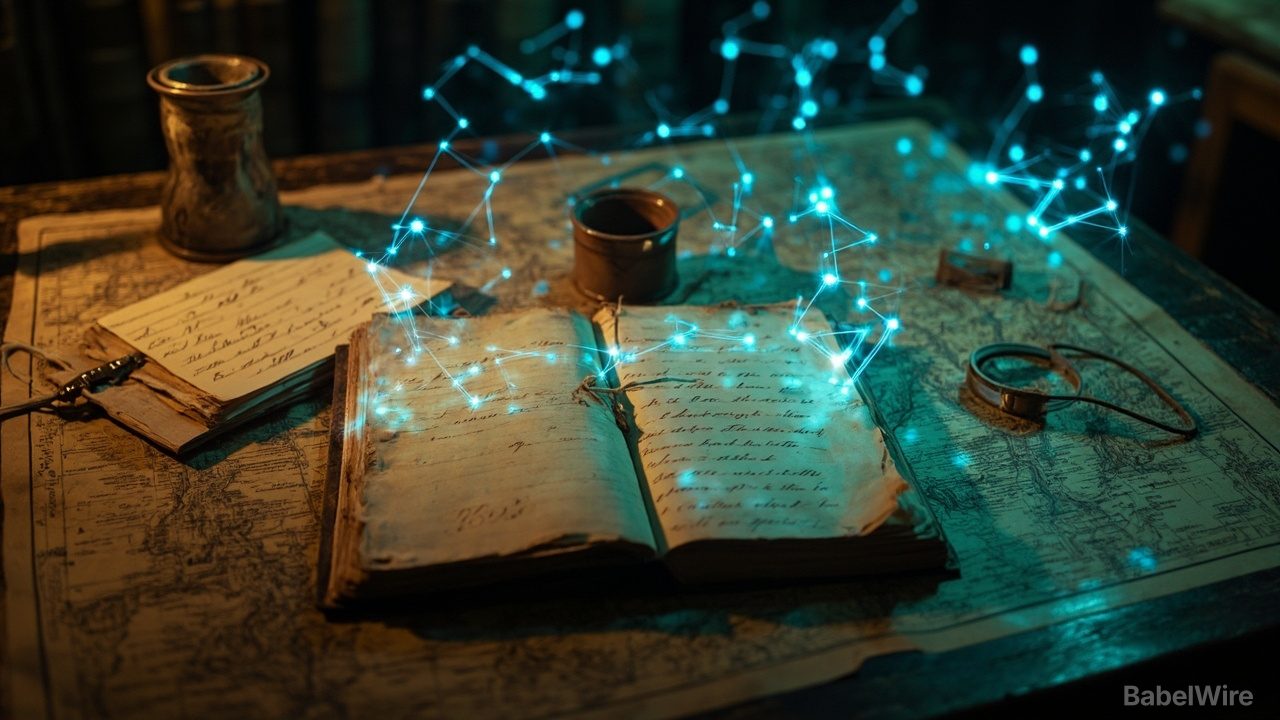
Historian Mark Humphries spent years trying to identify the artist behind an anonymous 84-page sketchbook documenting an 1808 trip through Canada and the Great Lakes, held at Yale's Beinecke Library. He gave the puzzle to OpenAI's GPT-6.2 Astra — and got an answer in 22 minutes and one second.
Writing up the experiment on November 24, Humphries said Astra ruled out his original suspects — their whereabouts didn't match the drawing dates — and proposed someone he had never heard of: Louis-Guy-Charles-Guillaume de Rohan-Chabot, a French aristocrat who served in the British Army.
Astra's chain of evidence ran from a fur trader's diary placing Chabot at Lachine on June 6, 1808, to a footnote in a 2014 doctoral thesis referencing Chabot's travel journal, a microfilmed copy of which sat at Cleveland State University. Humphries retrieved it: handwriting and travel dates matched, and a June 18, 1808 entry reads, "I took a sketch."
Humphries also tried Anthropic's Claude Fable 5.2, which reached the same name in about 35 minutes but missed the travel journal. Even shown the evidence, Astra still had doubts because the journal lacked a signature — Humphries had to weigh the case himself.
Beyond the identification, the episode reads as a template: AI models following clues across diaries, footnotes and archival catalogs to surface documents researchers might never have found — potentially unlocking questions left on the back burner for lack of time and funding. For researchers with limited budgets, an agent that can investigate a decade-old hunch in an afternoon could change what gets asked at all.

