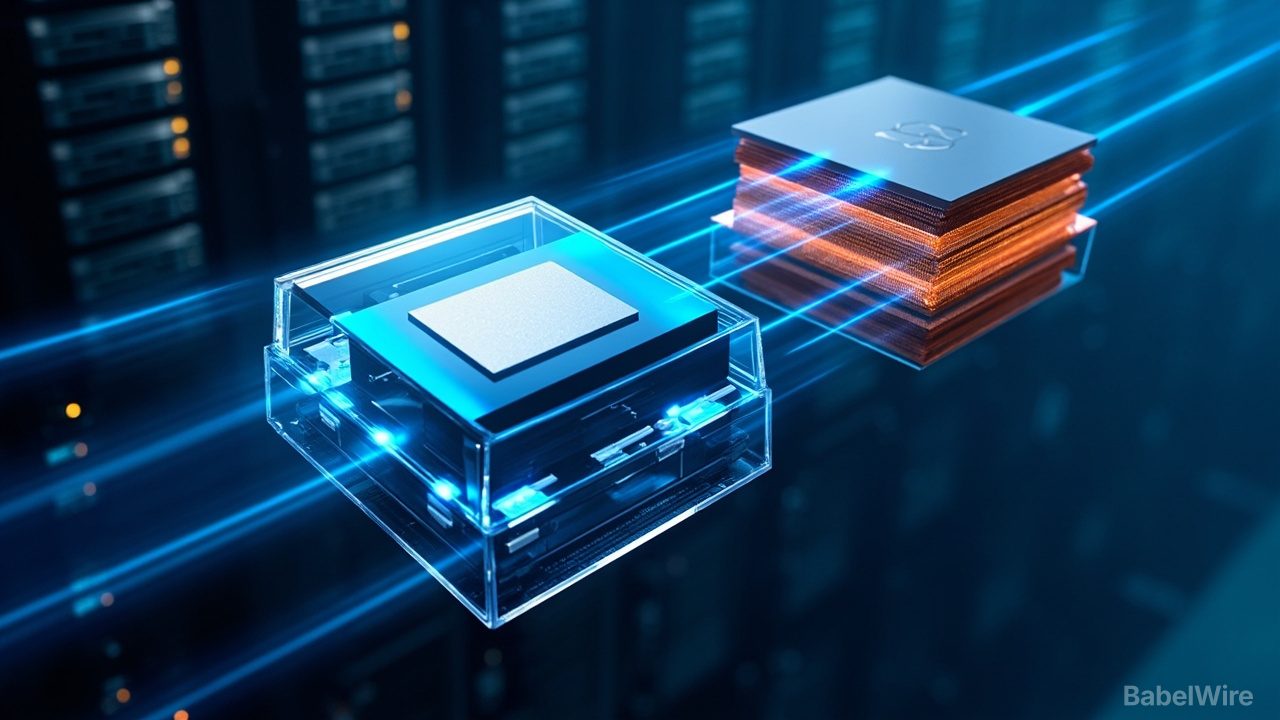
Google has added two systems to its eighth-generation TPU line-up: TPU 8tx for confidential inference and TPU 8i Max for very large context windows. That makes four TPU systems in a single year — the first time the company has introduced that many in twelve months.
TPU 8tx targets regulated enterprises and governments running frontier or proprietary models alongside their most sensitive data. Normally data is encrypted at rest and in transit but must be decrypted in memory while a processor works on it. 8tx builds encryption into the hardware layer and keeps data and model weights protected even during active use. It uses the same silicon as TPU 8t, paired with fifth-generation AMD EPYC hosts, and the low-latency Boardfly network — up to 2x lower latency than TPU 8t at near-zero performance cost.
TPU 8i Max attacks a different problem: the memory wall. Two TPU 8i chips share one package, doubling compute, SRAM and HBM bandwidth versus 8i. Because twice the silicon fits in the existing rack footprint, compute density per square foot and per watt goes up.
The framing matters more than the spec sheet. Google now offers a purpose-built accelerator for each stage of the agent lifecycle: 8t for training, 8i for low-latency reasoning, 8tx for confidential computing, 8i Max for million-token contexts. The software push is bundled in: TorchTPU is open source so PyTorch code runs without rewrites, and an open TPU agent toolkit is meant to automate onboarding inside tools like Claude Code, Cursor and Google Antigravity.
Google says it has nearly 100 external TPU customers. Both new systems are due later this year. Whether that is enough to pressure Nvidia's inference position depends less on the chips than on how many teams will actually move their software stacks.
