Google has rolled back an AI feature inside Google Earth less than 48 hours after turning it on, after experts and a BBC Verify investigation warned it could be used to create convincing fake satellite imagery and spread misinformation.
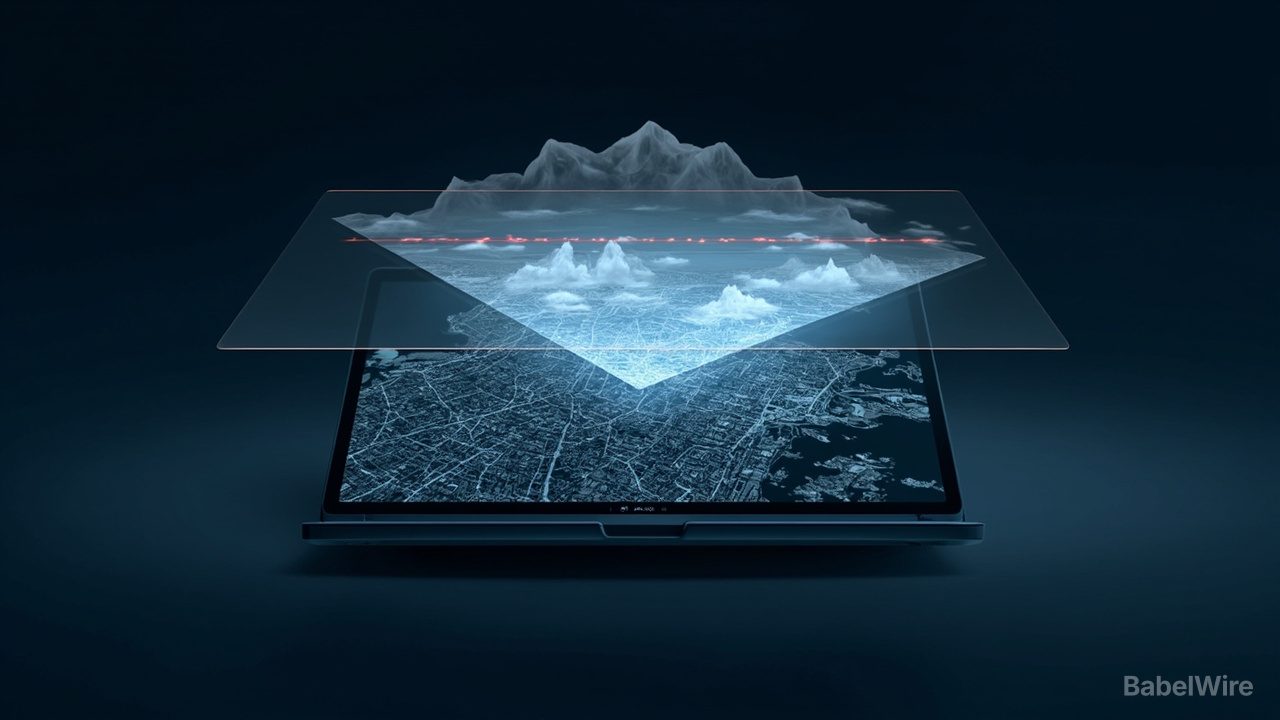
The feature integrated the company's Nano Banana 2 image generator into Google Earth, letting anyone use text prompts to layer AI-generated scenarios on top of real satellite, aerial or 3D imagery — which could then be downloaded and shared elsewhere. On Friday, Google said it was pausing the tool "while we work on implementing stronger guardrails," adding that it had seen "people sharing screenshots of generated imagery that appear to violate our policies."
BBC Verify's tests demonstrated the risk immediately: the tool generated a collapsed Eiffel Tower, a sinkhole swallowing the Great Pyramid of Giza, and Russian tanks in Ukraine's capital, all grafted onto real Google Earth maps. "The forgery does not have to look convincing on its own. It inherits the credibility of the map it was born on," said AI and misinformation expert Henk van Ess.
Detection also proved imperfect. While Google said AI content carries invisible watermarks that can be checked with its Gemini chatbot or Lens feature, BBC Verify found it could trick Gemini into saying the fake images were real, and some external AI-detection tools also failed to flag them.
The stakes go beyond a novelty feature. Geospatial analyst Bill Greer of the non-profit Common Space noted that satellite imagery has "historically been seen as an especially trustworthy source of data," making fake versions particularly damaging to public trust. AI-detection researcher Henry Ajder warned that fabricated imagery in fast-moving conflict zones could prove "destabilising."
Google acknowledged the sensitivity itself: "We know that people uniquely trust Google Earth for a reliable view of the world," it said. The company has not said when the feature might return, only that it is working on stronger guardrails first.
The episode is the latest in a string of AI-image missteps for major platforms, and underscores the speed at which generative tools are colliding with the credibility of real-world mapping data.