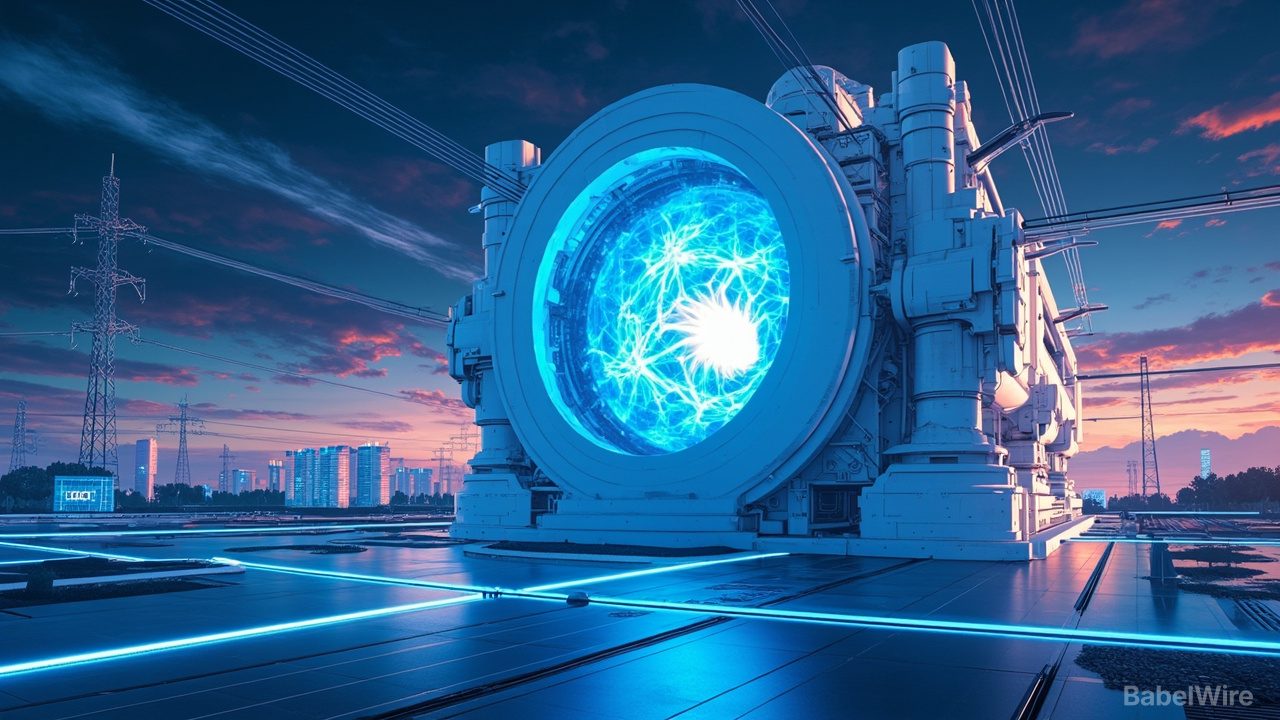
Fusion startup Realta Fusion this week announced a deal with Madison Gas and Electric that will place one of the first grid-connected fusion power plants in the country in Wisconsin, exploring construction of a 200-megawatt facility — roughly enough to power a small city — by the mid-2030s.
The partnership is part of a broader trend: utilities around the world are increasingly courting fusion startups, drawn by the technology's potential to provide clean, round-the-clock baseload power as AI data centers drive unprecedented electricity demand.
Only a handful of fusion startups have announced utility deals so far. Commonwealth Fusion Systems has partnered with Dominion Energy for Arc, a 400 MW plant near Richmond, Virginia, expected online in the early 2030s, with Google and Eni as customers. Helion is working with Chelan County PUD in Washington State for its 50 MW Polaris facility, targeting 2028 to supply Microsoft. Type One Energy plans a 350 MW plant on a former coal site near Oak Ridge, Tennessee, with the Tennessee Valley Authority. In Europe, Proxima Fusion is building Stellaris at a decommissioned fission plant site in southern Germany, in partnership with RWE.
What makes Realta's deal notable is the ecosystem it unlocks. The startup gains access to interconnection sites, engineering support, permitting assistance, and an equity investment — advantages that are critical for a technology still years from commercial deployment. Realta is converting an old Oscar Mayer factory in Madison into its R&D facility.
The convergence is driven by a simple equation. Utilities need clean power that can run 24/7 — something wind and solar alone cannot provide without massive battery storage. AI data centers are consuming electricity at a pace that has caught the industry off guard. And after years of steady scientific progress, fusion startups have moved from theoretical promise to engineering milestones that make utility partnerships reasonable bets.
For utilities, the timeline fits their worldview. These are organizations accustomed to planning decades ahead. As Realta's partners and peers have demonstrated, the combination of cost-efficient fusion designs, utility expertise, and government-backed interconnection access is turning what was once pure speculation into structured, capital-efficient risk.