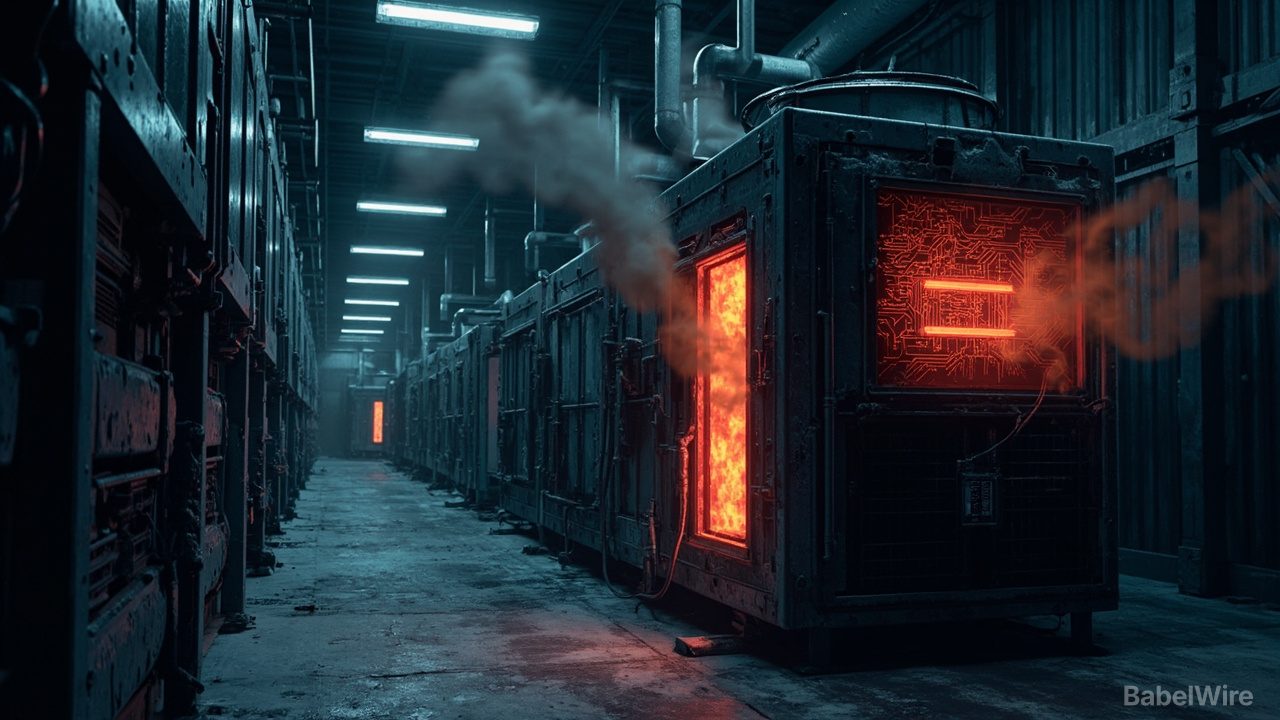
A wave of attacks on internet-connected cooling equipment has cost millions of dollars and, in some cases, started physical fires — and the root of the problem points to basic failures rather than sophisticated tradecraft, Ars Technica reports.
That is the detail worth dwelling on. Devices that monitor temperature and control compressors sit exactly on the seam between information technology and the physical world: they are networked, usually deployed in fleets rather than singly, and frequently run firmware that was never designed to face an adversary. A default credential, an unpatched service, an exposed management port — each is a routine finding in embedded equipment, and each is enough when the machine in question can be manipulated into defeating its own safety limits.
The commercial damage compounds quietly. Equipment is replaced, stock spoils, insurers investigate, and because the vulnerable devices rarely carry a consumer-facing brand or an obvious update mechanism, remediation is slow and partial — even after the incident is understood. Commercial refrigeration is not a peripheral concern: it underpins cold chains that feed whole regions.
The lesson is not new, but it keeps proving expensive. As industrial and commercial hardware is connected to the internet for monitoring and remote management, patching pipelines and credential hygiene have to arrive with it, and liability has to be assigned somewhere a manufacturer can feel it. Researchers have made that argument for a decade. Fires are a more persuasive one.