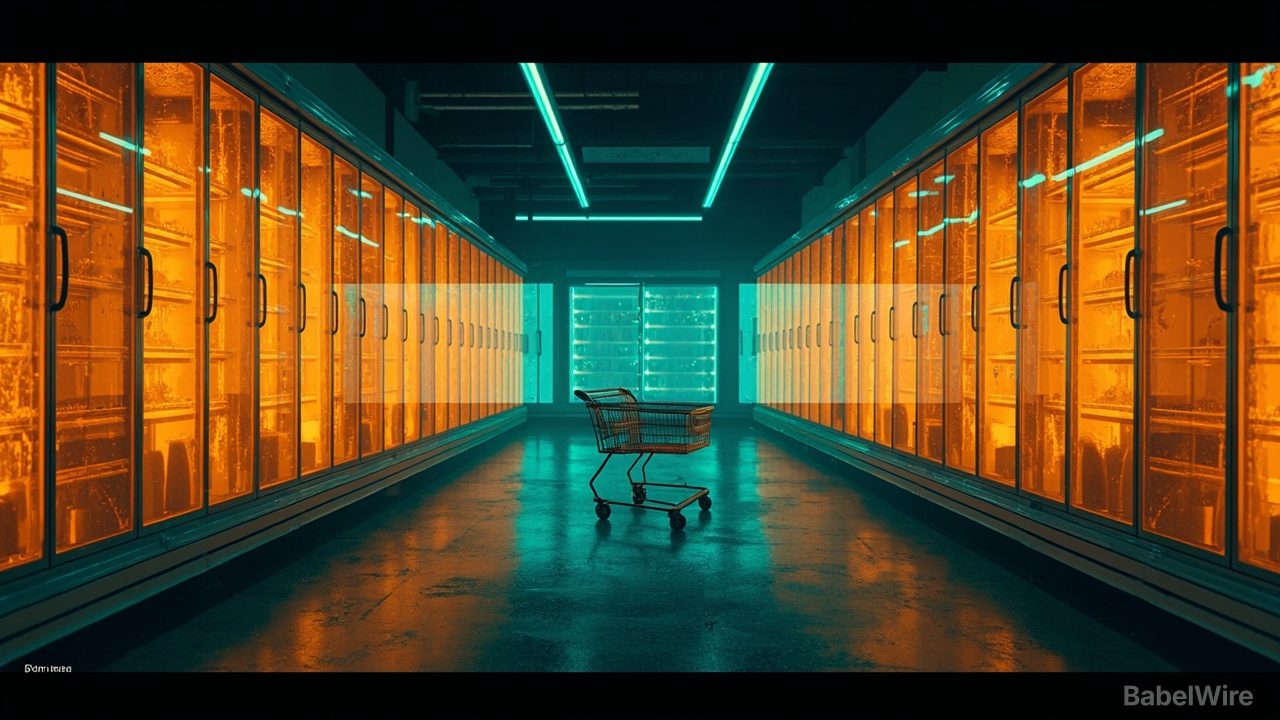
One night in October, hackers cranked up the temperature in refrigeration systems at hundreds of supermarkets across France, destroying millions of euros of food in what cyber professionals called one of the most unusual attacks in history. French intelligence agencies now say they know who did it: traces of Farsi and other clues in the digital trail point to Shahid Kaveh, an elite unit of the Islamic Revolutionary Guard Corps.
Shahid Kaveh, named after an Iranian commander killed in the 1980s Iran-Iraq war, is overseen by the Guards' Cyber Electronic Command and often operates under the online persona CyberAv3ngers. The group hacked Israeli-made industrial control devices inside US water, manufacturing and transportation systems in 2023 and 2024, leaving the message: Every equipment made in Israel is CyberAv3ngers legal target.
France is seeking international arrest warrants for three Iranians allegedly involved: Hamid Reza Lashgarian, believed by US intelligence to head the Guards' Cyber Electronic Command, and two Shahid Kaveh leaders, Mahdi Lashgarian, 37, and Reza Salarvand, 35. Both Lashgarians were placed under US sanctions in 2024. Iran has denied any role.
According to French authorities, the group used a Chinese-made scanning tool to find connected refrigeration units on the public internet and ran reconnaissance with Modbus, the digital language used to control industrial machinery. Similar attacks struck supermarkets in 10 other European countries this month, though no group has been blamed for those.
Analysts read the operation as an escalation. 'Iran has very clearly messaged that the global economy will be disrupted as a consequence of it being shut out from the world,' said Ellie Geranmayeh of the European Council on Foreign Relations, adding that Tehran increasingly views all NATO countries as legitimate targets. 'This is about sowing panic in Europe and increasing that global pain threshold.'
Not everyone is certain the order came from Tehran. Cynthia Kaiser, former deputy cyber director at the FBI, noted that the targeting looks more like Russian tradecraft and said she wouldn't be surprised if we eventually uncovered collaboration behind the scenes. Check Point's Gil Messing said any such operation would have to be sanctioned at senior levels of the IRGC, since using it burns the capability: 'This is not a very sophisticated attack, but it sends a very strong message.'


