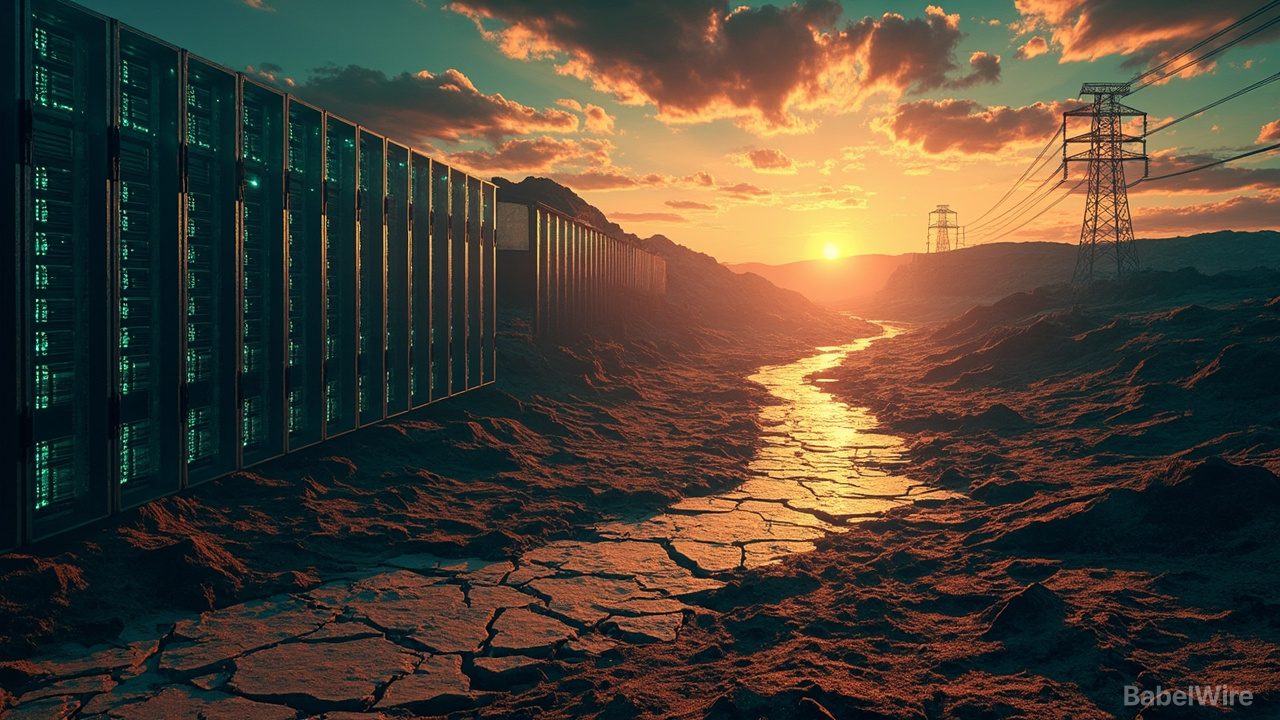
Two reports from The Verge on September 21, 2026 approach the same problem from opposite ends: the physical footprint of the AI data-center boom, and who has to account for it.
In California, officials moved to tighten rules covering the energy and water consumption of AI data centers — a sector whose electricity demand has become one of the fastest-growing loads on the grid. The significance is as much about precedent as about specifics: a major state is now asserting that large compute facilities must answer for the water and power they draw, not merely sign utility contracts and build.
On the same day, The Verge reported that Amazon is putting money into Colorado River conservation while still declining to disclose how much water its data centers use. That asymmetry — conspicuous funding for conservation on one side, silence about its own consumption on the other — is exactly the pattern that pushes regulators to legislate.
Data centers draw water in two ways: directly, through evaporative cooling, and indirectly, through the power plants that generate their electricity. In water-stressed basins such as the Colorado River, those withdrawals compete with farms, cities and ecosystems that are already over-allocated.
For the AI industry the direction of travel is clear. Utilities, legislatures and host communities are steadily less willing to treat compute capacity as weightless. Whether disclosure ends up voluntary or mandated is the live question; California's new rules and Amazon's continued silence suggest the answer is tilting toward mandated.
Why it matters: the build-out of AI capacity is constrained less by chips than by power and water. How those inputs are regulated is becoming a first-order variable in where — and whether — new data centers get built.