CloudNC, a UK-based manufacturing software startup, announced a $20 million Series B extension on Wednesday, bringing its total raised to $128 million. The round was led by Nimble Ventures with participation from Calculus Venture Capital, Entrepreneur First, and LM Capital — the venture arm of Lockheed Martin.
What CAM Assist Does
Before a CNC machine can cut a part, a machinist must decide how to hold it, which tools to use, approach angles, cutting speeds, and feeds. This process typically requires experienced programmers working with CAM (Computer-Aided Manufacturing) software like Autodesk Fusion or Mastercam.
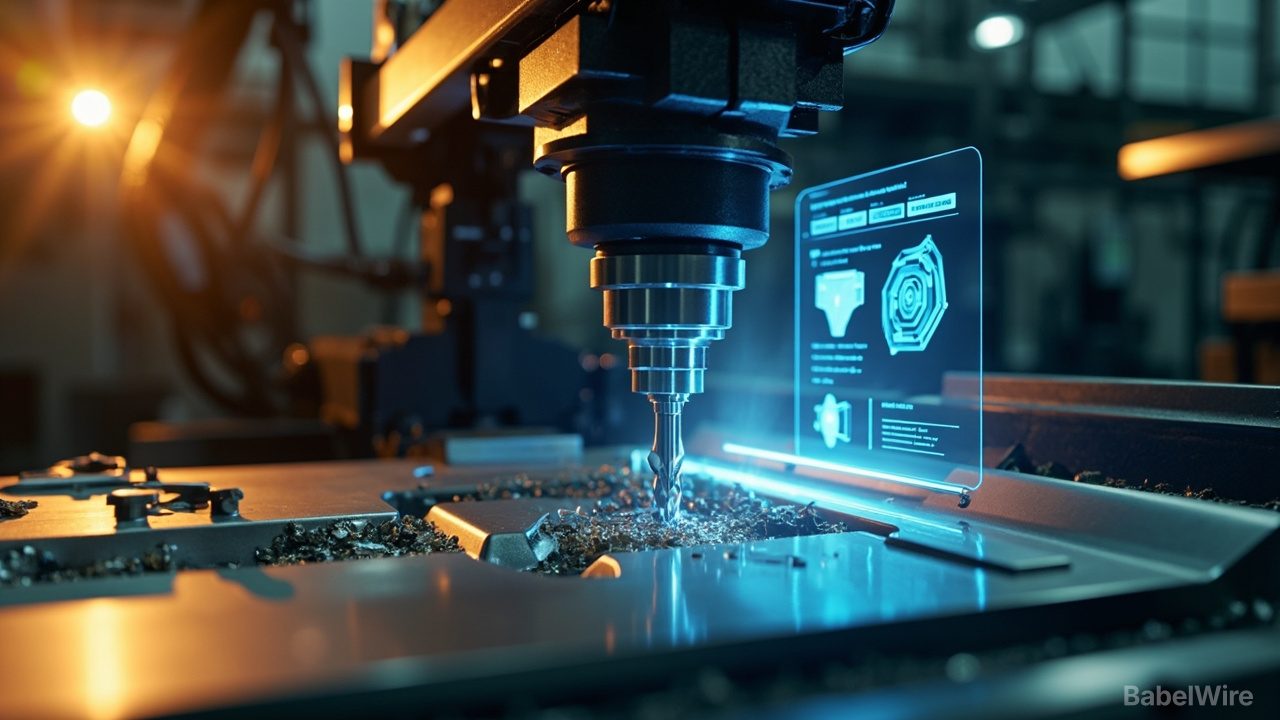
CloudNC's CAM Assist plugs directly into these existing systems as an AI co-pilot. It analyzes a part's geometry and generates a complete machining strategy — tool selection, approach directions, cutting parameters, and the G-code to execute it. A human programmer then reviews and approves the result.
If traditional CAM is a powerful toolkit, then CAM Assist is more like an expert assistant sitting alongside the programmer, said CEO and co-founder Theo Saville. It automates much of the first-pass thinking and repetitive setup so the human can review, improve, and approve the approach.
Scale and Market
More than 1,000 machine shops worldwide now use CAM Assist, with 80% of the customer base in the United States. The team stands at 80 employees.
The company's next product, Quote Agent, is set to launch next month. It targets the quoting bottleneck — helping shops quickly estimate the cost and risk of incoming projects so they can accept or reject work faster. This is particularly relevant as U.S. manufacturers look to reshore production amid a skilled-worker shortage in machining.
Machine shops need to quote faster, program faster, and deliver more with the people and machines they already have, Saville said.
Why It Matters
CNC machining is the backbone of automotive, defense, and consumer hardware manufacturing. The U.S. is experiencing a well-documented shortage of CNC programmers, and AI-assisted automation of the most repetitive parts of the workflow could help bridge that gap without eliminating expert oversight.
Saville noted the combinatorial complexity of the problem: There are more ways to machine a typical CNC part than there are atoms in the universe.