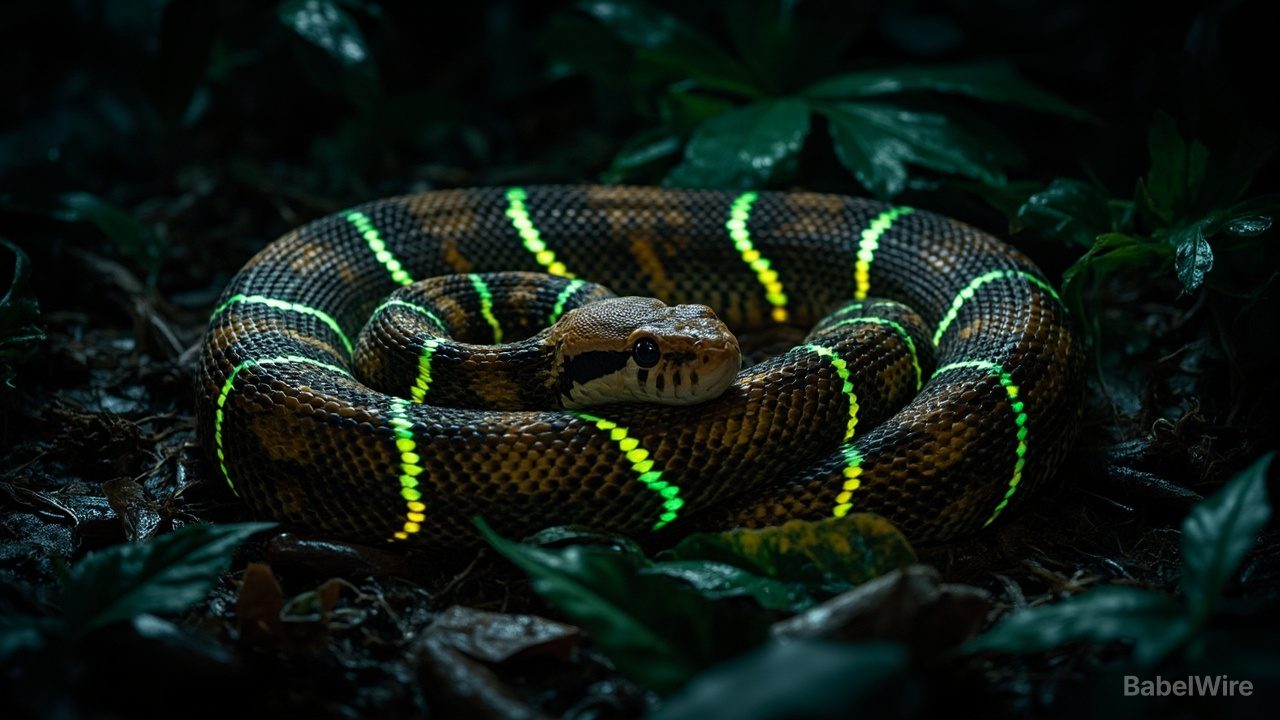
The brown tree snake invasion of Guam — one of the most devastating ecological disasters caused by an invasive species — may have succeeded because the reptiles carried far more genetic flexibility than scientists realized, a new study reveals.
Published July 24 in Science Advances, the University at Buffalo-led research used advanced long-read DNA sequencing to uncover more than 19,000 structural variants in the brown tree snake genome: large segments of DNA that had been duplicated, deleted, or rearranged.
These variations were concentrated in genes related to immune function and olfaction (sense of smell), which is critical for the snakes' hunting and navigation.
This hidden diversity helps solve a long-standing puzzle: how did a population founded by only a handful of snakes — likely arriving hidden aboard military cargo after World War II — survive intense inbreeding and explode to densities as high as 30,000 snakes per square mile?
The brown tree snake has driven many of Guam's native forest birds to local extinction and causes hundreds of power outages yearly by climbing electrical equipment. Despite decades of containment efforts, the snake has proven remarkably resilient.
"The brown tree snake is maybe not wildly diverse, but it has important sources of genetic diversity that have been underappreciated," said Trevor Krabbenhoft, PhD, the study's corresponding author.
The findings may have implications beyond Guam. For endangered species with small or inbred populations, the discovery suggests they may have more genetic flexibility than previously assumed.
"How we define genetic diversity and how we actually measure it is shaped largely by the technology of the day," said Levi Gray, PhD, a postdoctoral researcher. Older sequencing technology missed these large structural variants, which alter nearly eight times more of the genome than single-letter DNA changes.