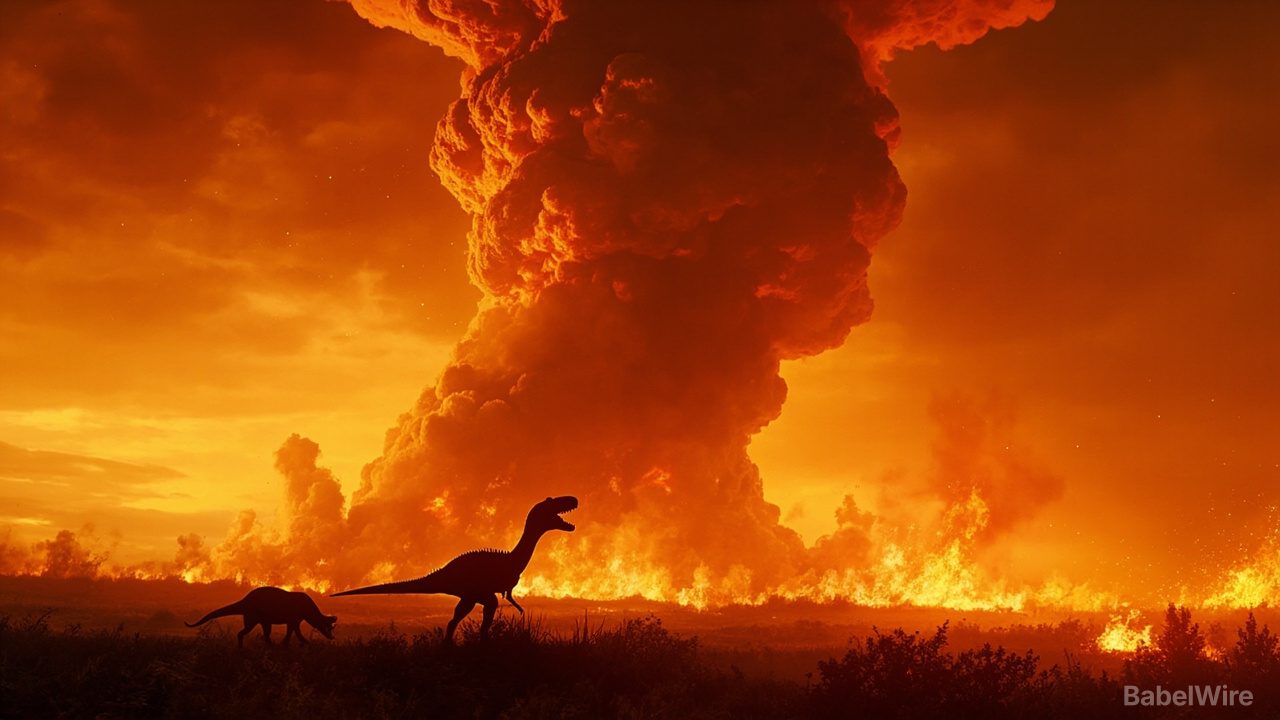
A husband-and-wife team at Purdue University has provided the most detailed explanation yet of how a single asteroid impact 66 million years ago devastated the entire global ecosystem. Brandon and Alexandria Johnson, publishing in the Journal of Geophysical Research: Biogeosciences, found that the Chicxulub impact ejected over 1000 cubic kilometers of vaporized rock into the atmosphere. As spherules rained back down, the dust cloud trapped nearly all outgoing thermal radiation, with an upward transmittance of essentially zero. The dust layer acted as a thermal blanket, reradiating trapped energy back to the surface with enough intensity to ignite wildfires and kill exposed creatures within one to two hours. This dust layer over the planet is essentially acting like a lid, Alexandria Johnson explained. It is keeping almost all the radiation that should find its way back to space and reradiating it back to the surface. The research revives the heat pulse theory of dinosaur extinction, which had fallen out of favor. The Johnsons argue both mechanisms worked in sequence: the heat pulse killed within hours, while ensuing decades of darkness collapsed food chains.
A Lid of Asteroid Dust Smothered Earth in Heat, Killing the Dinosaurs in Under Two Hours
New Purdue University research shows the asteroid that killed the dinosaurs sent up a near-impermeable dust layer that trapped thermal radiation, raising surface temperatures enough to kill exposed creatures within an hour.
AI synthesis2 sources6