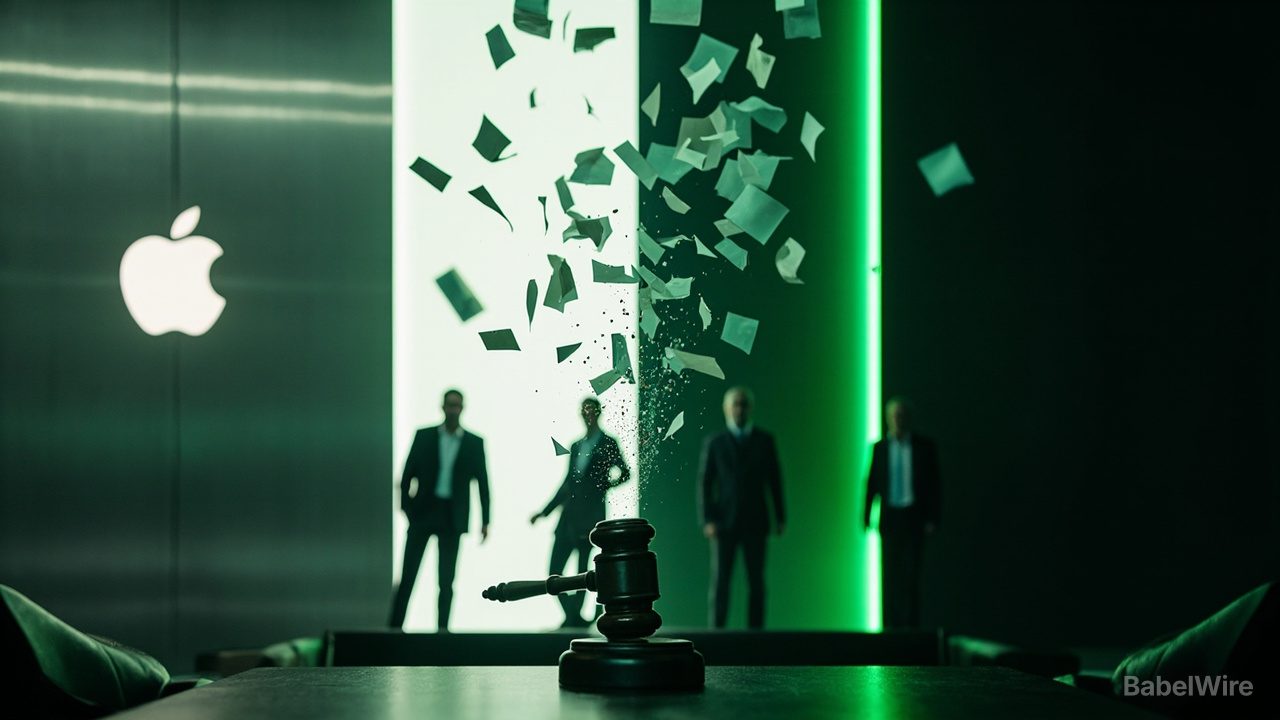
Apple on Friday sued OpenAI and two former employees in federal court in Northern California, alleging a coordinated campaign to misappropriate trade secrets and accelerate OpenAI's push into consumer hardware.
The lawsuit — one of the most consequential legal battles in the AI industry — accuses OpenAI of systematically acquiring Apple's confidential design and manufacturing information through former employees, supplier relationships, and aggressive recruiting. More than 400 former Apple employees now work at OpenAI, according to the filing.
The Allegations
Apple claims that Chang Liu, a former senior system electrical engineer, failed to return a company-issued laptop and later exploited an authentication bug to access Apple's internal network, downloading "dozens of confidential hardware-related files."
Tang Yew Tan, OpenAI's hardware chief and a former Apple VP of product design for iPhone and Apple Watch, is accused of "methodically using Apple's confidential information to benefit OpenAI" before his departure.
In one striking allegation, Apple claims that an OpenAI job candidate told them he "didn't even know we could take those from the office" after being asked to bring Apple parts to a job interview.
The Hardware Battle
The lawsuit comes after OpenAI acquired io Products — the hardware startup founded by former Apple design legend Jony Ive — in a $6.5 billion deal last year. Analysts widely believe OpenAI is developing its own phone or AI-device, directly challenging Apple's iPhone dominance.
From Partners to Enemies
Apple wrote to OpenAI in February 2026 expressing concerns that its confidential information was reaching the AI company and requested discussions. It received no reply.
Legal Experts Weigh In
Mark Lemley, a Stanford Law professor, called the case "potentially a very big case." OpenAI denied the allegations, stating: "We have no interest in other companies' trade secrets."
Sources
- reuters.comReuters — Apple sues OpenAI, two former employees for trade secrets theft
- cnbc.comCNBC — Apple sues OpenAI alleging trade secret theft
- bloomberg.comBloomberg — Apple Sues OpenAI for Trade Secret Theft in Blockbuster Case
- theguardian.comThe Guardian — Apple sues OpenAI, alleging artificial intelligence company stole trade secrets