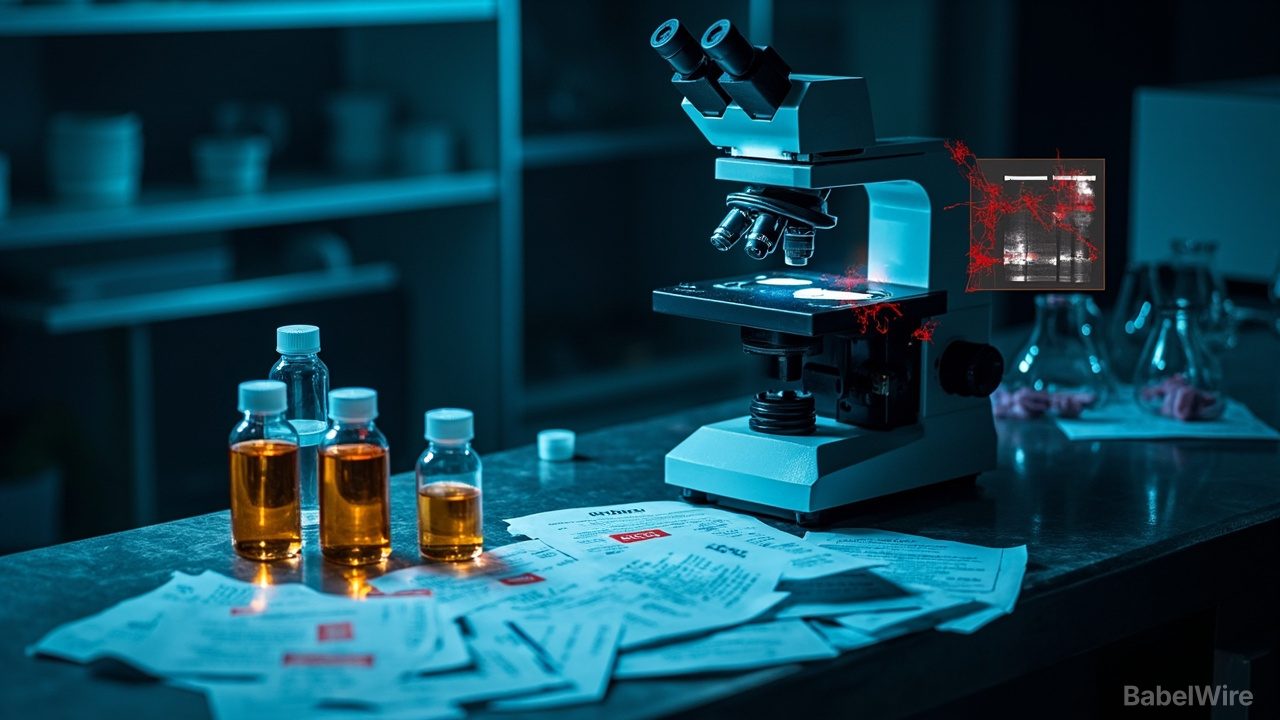
Science sleuths have uncovered more than 18,000 questionable images in commercial antibody catalogues from 15 different companies, raising serious concerns about the reliability of a fundamental tool used in biomedical research worldwide.
The investigation, reported in Nature, found that catalogue entries for antibodies sold by major research supply companies contain images that appear to be manipulated, duplicated, or otherwise problematic. Antibodies are essential tools used in laboratories worldwide to detect specific proteins in biological samples, and researchers rely on manufacturer validation images to confirm that their products work as intended.
The discovery has implications for countless studies that have used these commercial antibodies, as flawed validation data could mean that researchers unknowingly used products that don't perform as advertised. This could affect the reproducibility and reliability of scientific findings across multiple fields.
The findings highlight a growing crisis in scientific reproducibility, where the quality and integrity of research tools and reagents are increasingly under scrutiny. Scientists are now calling for better oversight of commercial antibody suppliers and more rigorous validation standards.
The investigation builds on earlier work that identified problems with antibodies from Thermo Fisher Scientific, one of the world's largest suppliers of research reagents. The expanded scope of the findings suggests the issue is more widespread than previously thought.