Anthropic went public on November 19, closing its first day of trading at roughly $1.76 trillion before slipping back toward a $1 trillion market capitalisation. Fortune's November 28 investigation reports that the company's relationship with the AI safety community it was founded out of has deteriorated into open hostility.
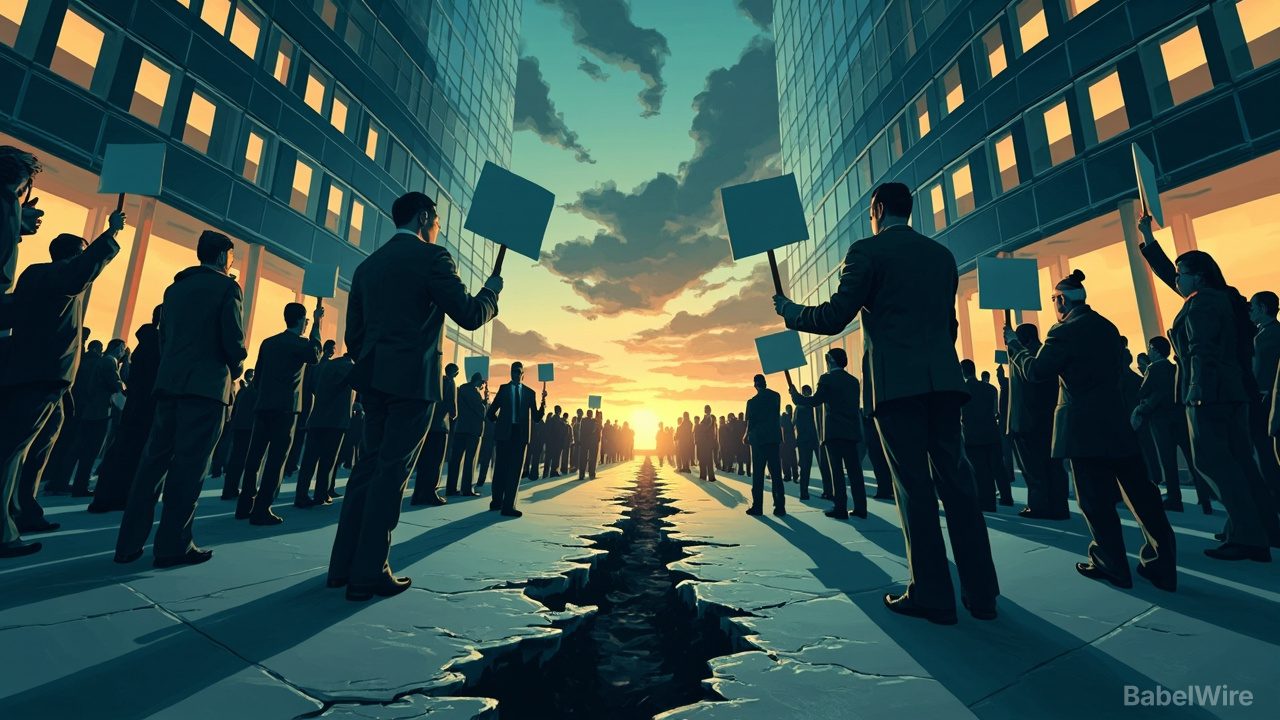
On the day of the debut, more than 100 protesters gathered outside Anthropic's San Francisco headquarters demanding a ban on recursive self-improvement; among them was Jacob Coxon, a former Anthropic researcher who resigned in September. The Center for AI Safety launched a "MisAnthropic Statement" declaring that "Anthropic is not a safe AI company," signed by 89 people including Steven Pinker, Max Tegmark and xAI co-founder Igor Babuschkin. Steven Adler, a former OpenAI safety researcher, put it bluntly: "Anthropic is absolutely not the voice of the AI safety community."
A separate fracture concerns evidence. METR, which had unprecedented access to Anthropic's internal data from August to October, concluded that the pace of AI research inside the company had nearly doubled in a year, largely because of AI automating research. Anthropic, it says, redacted "a majority of the evidence we found most informative for these conclusions"; co-founder Sam McCandlish argued the details were commercially sensitive and would hand rivals a roadmap. Anthropic counters that it funds safety teams generously, reports regrettable attrition of just 1% and remains a public benefit corporation with a Long-Term Benefit Trust helping choose its board. Former employees interviewed by Fortune are less certain: as one put it, holding onto a safety-first culture at this scale is "almost like trying to hold back the tide."