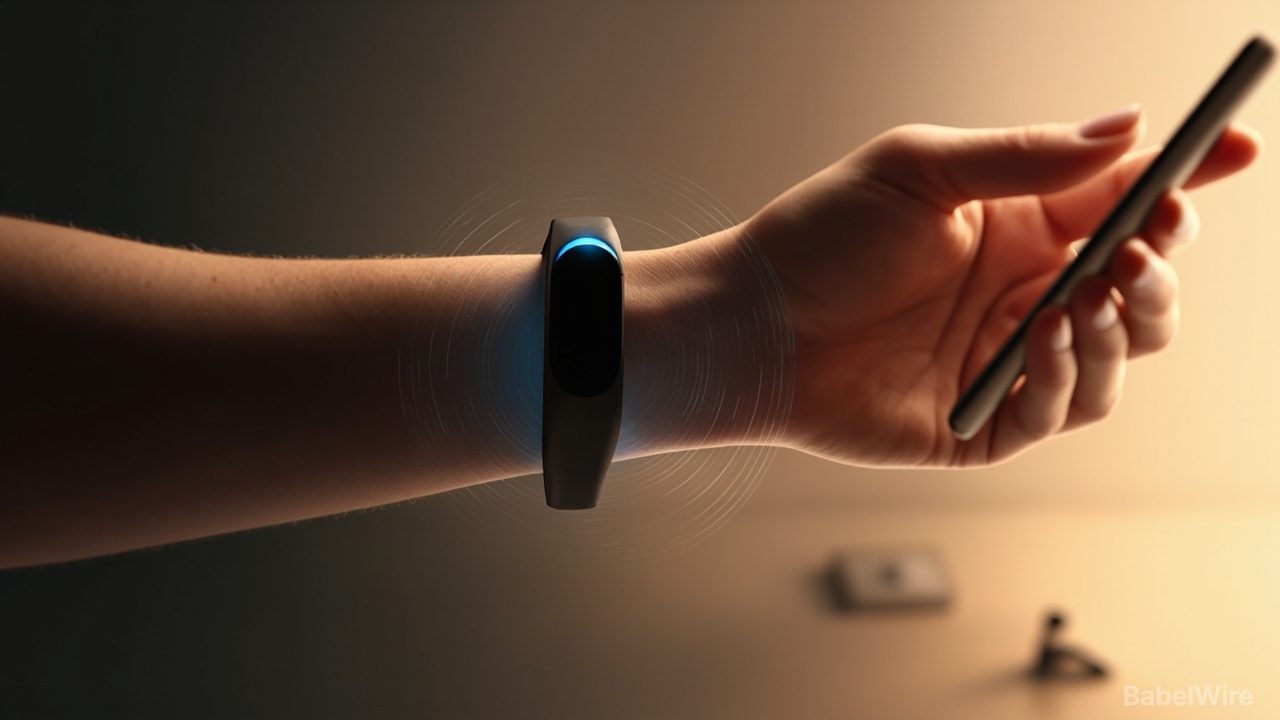
Amazon is moving ambient AI off the tabletop and onto the body. According to Golem, the company has introduced a family of AI audio devices under the name Bee, comprising an audio wristband and a companion clip for a phone.
The wristband encodes a simple bet: a microphone that is always with you, rather than always in the next room. A smart speaker hears you only when you are home and near it; a phone hears you only once it is out of a pocket. A body-worn microphone closes that gap, letting an assistant pick up a request without the user breaking stride.
Amazon has spent a decade trying to turn Alexa from a novelty into a habit, and hardware has been the recurring obstacle. Speakers and displays live in fixed places, and the Echo Frames and earlier earbuds never became default accessories. A wristband plus a phone clip reads as yet another attempt at a form factor people will actually keep on.
The company is not alone in that search. Meta has pushed camera-and-audio glasses into the mainstream, OpenAI has been working toward a device of its own, and a string of smaller startups have tried and mostly failed to sell AI hardware on the strength of the assistant rather than the object. What separates the participants now is distribution and the ability to subsidise hardware, and Amazon has both.
The open questions are the familiar ones for always-on audio. Battery life, how much of the audio is processed on-device versus in the cloud, when the device is listening, and whether recordings are retained all bear on whether people will trust something that spends the day near their mouth. In the reporting reviewed for this issue, Amazon had not detailed pricing, availability or how the processing is split.
For the wider market the launch matters less as a gadget than as a signal. The AI wearable category has so far been defined by short-lived experiments and a steady stream of refunds. A company of Amazon's size shipping a wristband sets a reference point for a race in which several well-funded players are competing to own the ambient layer — the always-available interface between a person and a model.