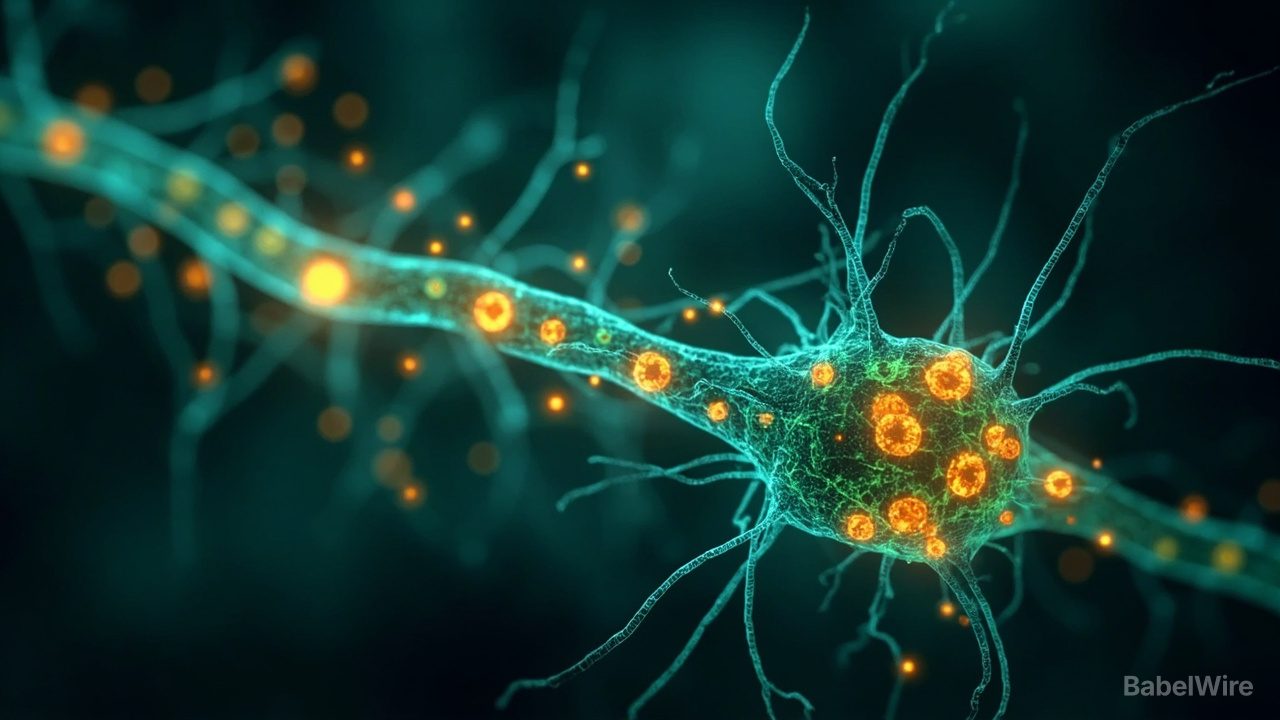
Researchers have identified a previously unrecognized feature of Alzheimer's disease: dense clumps of degraded mitochondria — the organelles that power our cells — accumulating inside neurons. Published in Nature Neuroscience, the finding could give scientists a new target for treatments and a fresh diagnostic marker for the most common form of dementia.
The team, led by biochemists, geneticists and gerontologists at the University of Minnesota, found these "mitochondrial plaques" (MPs) in the brains of genetically engineered mice and in postmortem human brains with Alzheimer's — but not in age-matched healthy controls. The clumps stem from dysfunctional mitophagy, the process by which cells recycle damaged mitochondria, and they appear to form directly inside neurons, unlike the well-known amyloid plaques that build up between brain cells.
"Unlike the amyloid plaques found outside brain cells, these plaques appear to directly affect neurons, which makes them a potential new target for Alzheimer's disease treatments," said cell biologist Xiuli Dan, the study's first author.
To see the process in action, the researchers engineered transgenic mice carrying a "mitophagy reporter" called Keima — a pH-sensitive fluorescent protein derived from coral that glows green around neutral mitochondria and orange around acidic ones. The mice began showing mitochondrial plaque accumulation as early as 15 weeks, equivalent to early human adulthood, and the plaques grew denser and more acidic with age as the brain's recycling capacity declined.
The plaques harbored abundant amyloid precursor protein — the source of amyloid-beta peptides — and became increasingly mixed with amyloid plaques as the disease progressed. They also accumulated within the neurites, the axon and dendrite extensions that send and receive the brain's electrical and chemical signals, and appeared to overwhelm lysosomes, the cellular "garbage disposals" tasked with clearing them.
The findings may explain a puzzle of Alzheimer's research: patients immunized against amyloid-beta showed successful plaque clearance yet still experienced neurodegeneration. The researchers suggest future therapies may need to combine approaches — targeting both amyloid-beta plaques and mitochondrial plaques — and that boosting mitophagy before it fails could help slow or even prevent the disease. "By understanding how these plaques form and contribute to disease progression, we may be able to develop new strategies to slow or even prevent Alzheimer's disease," said biochemist Paul Robbins.
Sources
- sciencealert.comUnexpected Structure Detected in The Brains Of Humans And Mice With Alzheimer's Disease (ScienceAlert)
- med.umn.eduNew University of Minnesota research identifies potential therapeutic target for Alzheimer's disease (University of Minnesota)
- pubmed.ncbi.nlm.nih.govMitochondrial accumulation and lysosomal dysfunction result in mitochondrial plaques in Alzheimer's disease (Nature Neuroscience, via PubMed)