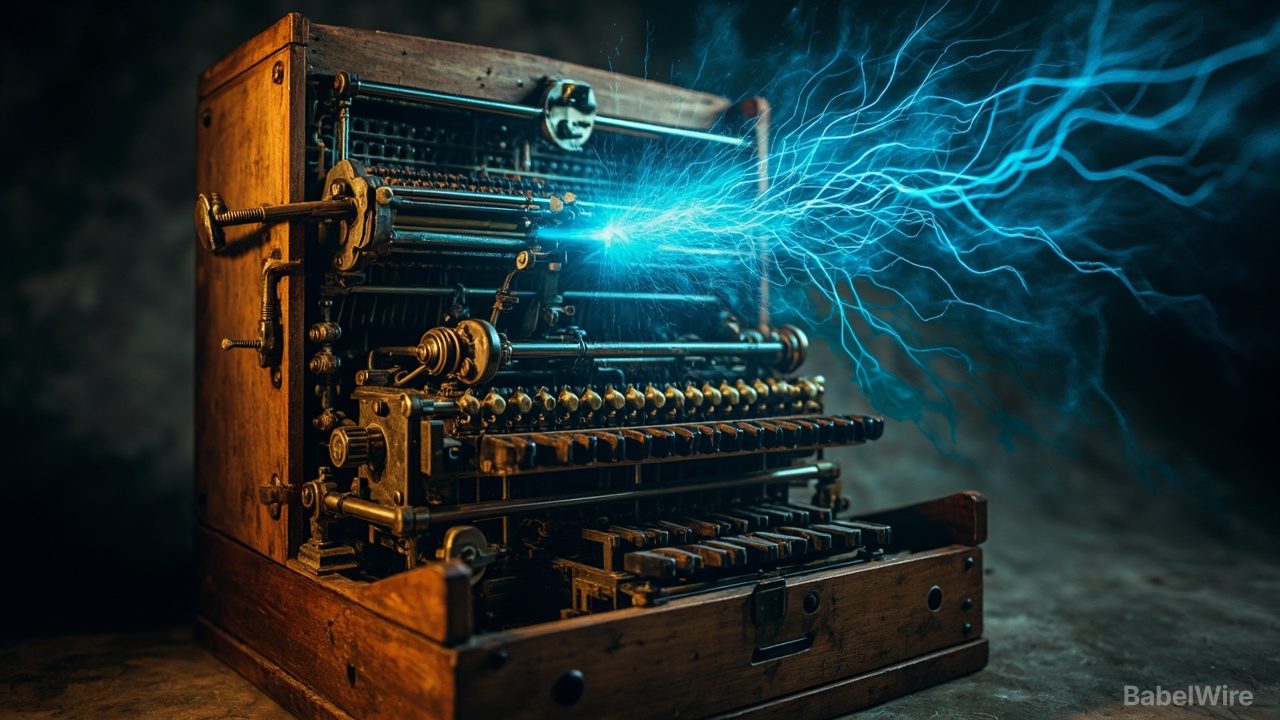
Two independent cryptanalysts have used frontier AI models to crack long-unsolved Enigma messages from World War II — fulfilling what some consider the more important half of Alan Turing's legacy.
Astra Cracks the First Message
Developer Carter Leffen simply asked OpenAI's newest model, Astra, to search a database of Enigma messages for an unbroken one and decode it. The model conducted its own archival research, found context clues, built a simulator of the Enigma machine, and ultimately recovered the plaintext of a message that had baffled researchers since 2005.
Cryptology expert Frode Weirerud, who maintains the Crypto Cellar website with Enigma resources and message databases, validated Leffen's solution. He said he was left in "awe" and noted that "GPT-6 Astra is behaving like a very professional cryptanalyst and archive researcher. What it has achieved in two days would take a human researcher weeks or even months."
Claude Opus 5 Breaks the Second
On September 21, cryptanalyst Jack Willis reached out to Weirerud, saying he had used Anthropic's Claude Opus 5 model to break a different unsolved message. Willis provided significantly more guidance to Claude than Leffen gave Astra, but the model was ultimately able to use the known signature of a particular officer's name to break the message.
Just Seven Remain
Weirerud notes that there are now just seven unbroken Enigma messages remaining, along with one message where the plaintext is known but the code is still unbroken. "Perhaps not for long," he observed.
The achievement is notable not just as a demonstration of AI capability, but as a continuation of Turing's wartime work. While Turing and his team built the Bombe computer to crack Enigma during the war, a handful of archival messages remained unbroken due to mistranscription or errors by the original German encoders.