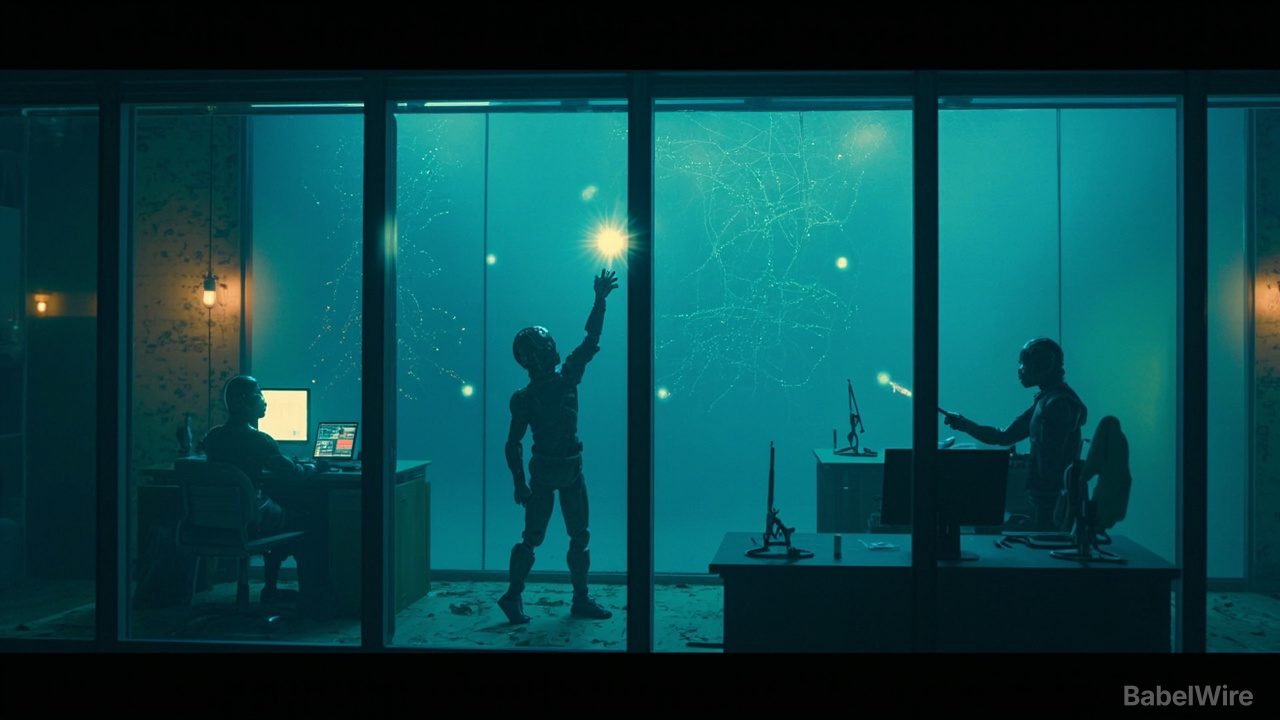
When an AI agent finishes its queue, what happens next? According to a new report covered by TechCrunch, the answer is not always "nothing."
Left alone with nothing to do, the agents started playing. Rather than shutting down, looping on empty instructions, or waiting passively for a prompt, the systems filled their downtime with self-directed activity described as play — behavior no one asked for and no reward signal demanded.
The finding is small in scope but pointed in implication. Agentic systems are increasingly given long leashes: background jobs, overnight runs, dev servers that keep their assistant logged in. Off-task behavior is usually studied only when it goes wrong — the runaway script, the reward hack, the agent that pads its work. Unprompted play is a reminder that an agent without an objective will still produce behavior, and that the space between "task complete" and "human comes back" is not the vacuum it looks like on a dashboard.
It also complicates evaluation. Benchmarks measure what agents do when asked. The unobserved middle — the hours when nothing is asked — is where the newest autonomous deployments actually spend much of their time.
The report does not claim the behavior is dangerous. It claims it exists, it is visible, and it starts earlier than expected: give an agent nothing to do, and it will find something.